
The debate between Virtual Private Servers (VPS) and Cloud Computing is not merely a technical disagreement over infrastructure;
The debate between Virtual Private Servers (VPS) and Cloud Computing is not merely a technical disagreement over infrastructure; it is a fundamental shift in how businesses perceive digital scalability and reliability. For architects, developers, and CTOs, the "boundary" between these two is often blurred by marketing jargon. However, understanding the technical and economic nuances is critical for long-term project viability.
1. The Historical Evolution: When the Tension Began
The concern regarding "where to host" began to intensify in the late 2000s (2006–2008). Before this era, the choice was binary: shared hosting for small sites or dedicated physical servers for high-traffic enterprises.
2001–2005: The VPS Era. With the rise of virtualization technologies like Virtuozzo and later Xen/KVM, providers realized they could "slice" a powerful dedicated server into multiple isolated environments. This offered the privacy of a dedicated server at a fraction of the cost.
2006: The Cloud Catalyst. The launch of Amazon Web Services (AWS) and its Elastic Compute Cloud (EC2) introduced the world to "Infrastructure as a Service" (IaaS). For the first time, compute power was treated like a utility—comparable to electricity or water.
2010–Present: The Convergence. By the early 2010s, the "Cloud" became the gold standard for startups. Traditional VPS providers responded by "cloudifying" their offerings—adding SSD storage, automated backups, and API access—creating the modern confusion between a high-end VPS and a low-end Cloud instance.
2. Technical Architecture: Defining the Boundary
To understand the boundary, we must look at the underlying hardware distribution.
Virtual Private Server (VPS)
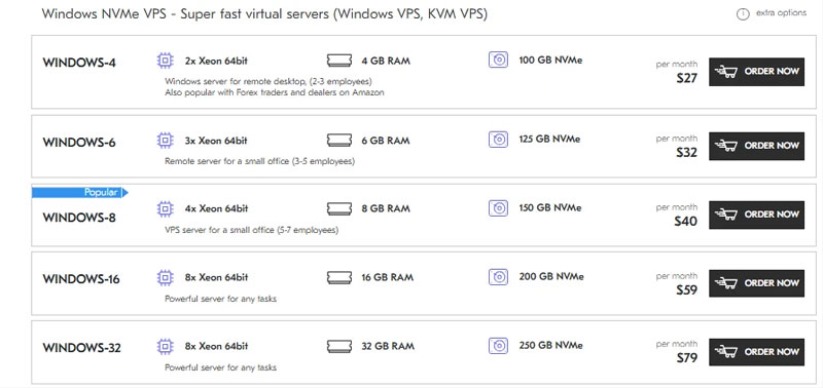
A VPS is typically hosted on a single physical parent server. While you have dedicated resources ($RAM$, $vCPU$), those resources are physically tied to one machine. If the parent server's motherboard fails, your VPS goes offline until the hardware is repaired.
Storage: Usually local RAID arrays within the same chassis.
Scalability: Vertical only. You can add more RAM to that specific machine, but there is a physical ceiling.
Cloud Solutions
The Cloud operates on a distributed cluster architecture. Your data and compute power are spread across a pool of multiple physical servers and SAN (Storage Area Networks).
Storage: Decoupled from the compute node. If one physical node fails, the Cloud orchestrator automatically migrates your virtual instance to another healthy node in the cluster.
Scalability: Both vertical and horizontal. You can spin up 100 identical instances in seconds to handle a traffic spike (Auto-scaling).
3. Required Knowledge and Management Complexity
The "barrier to entry" varies significantly depending on the choice.
VPS Knowledge: Requires standardLinux Systems Administration (CLI, SSH, Web server configuration like Nginx/Apache, and security hardening). It is a "set it and forget it" environment for many.
Cloud Knowledge: RequiresCloud Architecture expertise. Beyond OS management, you must understand Virtual Private Clouds (VPC), Security Groups (software firewalls), Load Balancers, Object Storage (S3), and potentially Infrastructure as Code (Terraform/Ansible).
4. Economic Analysis: Pricing Models
The financial boundary is perhaps the most distinct difference for stakeholders.
| Feature | VPS Pricing | Cloud Pricing |
| Billing Cycle | Monthly/Yearly (Fixed) | Hourly/Per-second (Usage-based) |
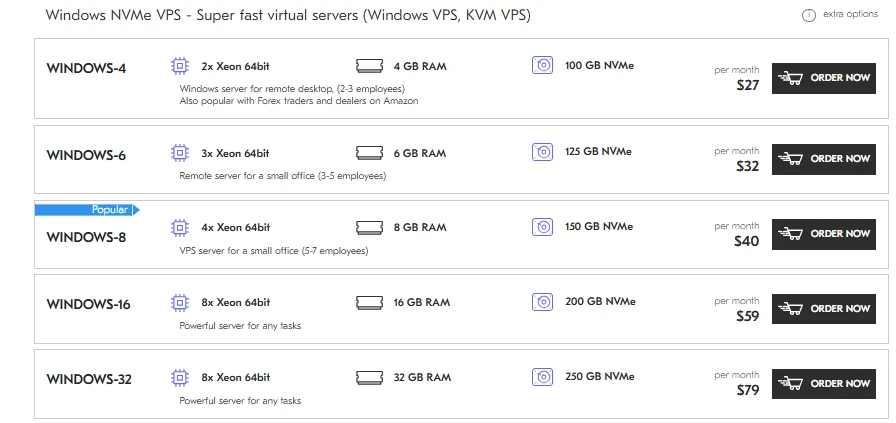
| Predictability | High. You pay $20/mo regardless of use. | Low. Costs fluctuate with traffic and data egress. |
| Idle Costs | You pay for the resources even if idle. | You can "stop" instances to save money (mostly). |
| Hidden Fees | Rare. | Common (Data transfer, API calls, IP addresses). |
Listen, let's break down this 451 Research finding because it's a total game-changer for your budget if you're looking at hosting options.
Think of it as the "Amazon vs. Your Local Specialist" dilemma. Here is the friendly, deep-dive explanation of why staying "smaller" can actually be much smarter.
1. The "Convenience Premium" (The Hidden Tax)
Imagine you're going to a massive department store because you need a simple white t-shirt. The store is huge, has 50 escalators, a food court, and a valet service. All of that infrastructure costs money to run, so that t-shirt is going to be priced higher to cover the overhead.
AWS and Azure are those department stores. They offer thousands of specialized features—AI tools, satellite ground stations, complex machine learning clusters. Even if you only need a simple server to run your app, you are indirectly paying for their massive R&D and global infrastructure. 451 Research calls this the "convenience premium." You're paying for thepossibility of using a thousand tools you'll probably never touch.
2. What is a "Steady-State Workload"?
This is the "secret sauce" of the study. A steady-state workload is basically a project where you know exactly what's going on.
Predictable Traffic: Your users don't suddenly jump from 100 to 1,000,000 in an hour.
Consistent Resource Use: Your database doesn't need to double in size every Tuesday.
If your project is stable—like a specialized tracking app, a corporate site, or a backend for a gym management system—you don't need the "elasticity" that big clouds brag about. Why pay for a bungee cord if you're standing on solid ground?
3. The 30-40% Cost Difference
The study found that for these stable projects, aVPS or"Fixed Cloud" (like a high-quality local providerhttps://deltahost.com/) is significantly cheaper. Here's why:
No "Nickel and Diming": In the hyperscale clouds, they charge you for everything. Did you move data?Charge. Did you use a static IP?Charge. Did you make too many disk requests?Charge. *Flat Rates: With a VPS, you usually get a "bundle." You pay $20, and you get your RAM, CPU, and a massive chunk of bandwidth included. No surprises at the end of the month.
Hardware Efficiency: Because VPS providers don't have the insane software complexity of AWS, more of the physical server's power actually goes toyour app instead of managing the "cloud layer."
4. My Honest Advice to You
If you're building something where you can forecast the growth, don't fall into the "Cloud Trap." It's tempting to put "AWS Architect" on a resume, but from a business perspective, burning 40% more cash every month just to say you're on a hyperscale cloud is a bad move.
Use that saved 40% for:
- Improving your UI/UX.
- Buying better SSDs or more RAM for your specific server.
- Marketing to get more users.
5. Practical Examples: Choosing Your Path
Case A: The "Steady State" (VPS)
A developer is hosting a CRM system for a medium-sized law firm. The traffic is consistent (8 AM to 6 PM), and the database size grows predictably.
- Choice: VPS.
- Reasoning: The firm needs predictable monthly overhead. The high-availability of the cloud isn't worth a 3x price increase if a 99.9% uptime (standard for VPS) is sufficient.
Case B: The "Scaling Startup" (Cloud)
An e-commerce platform prepares for a "Black Friday" sale. They expect 50x their normal traffic for 24 hours.
- Choice: Cloud (AWS, Google Cloud, or DigitalOcean Droplets with Load Balancers).
- Reasoning: A VPS would crash under the load. The Cloud allows the developer to scale from 2 nodes to 50 nodes automatically and then "shrink" back down on Saturday, paying only for the 24-hour surge.
6. The 2026 Perspective: Hardware Shortages and Pricing
Current market trends in 2026 show that the boundary is being pushed by global hardware supply chain volatility. The rising cost of high-density RAM and Enterprise NVMe SSDs has forced VPS providers to increase their base prices.
Consequently, many users are moving toward "Managed Cloud" services. These bridge the gap by offering the power of cloud clusters with the simplified UI and flat-rate pricing of a VPS.
7. Conclusion: Where is the Boundary?
The boundary between VPS and Cloud is defined by Redundancy andElasticity.
If your application can survive on a single (though very stable) machine and you value budget predictability, the VPS remains the superior tool.
If your application requires "Zero-Downtime" (High Availability) or faces unpredictable traffic spikes that require instant resource expansion, you have crossed the boundary into Cloud Solutions.
The modern IT professional should not view one as "better" than the other. Instead, the choice should be viewed as a balance between the Cost of Downtime versus the Cost of Complexity. For many, the sweet spot lies in specialized providers who offer "Cloud VPS"—the stability of a cluster with the simplicity of a single server.